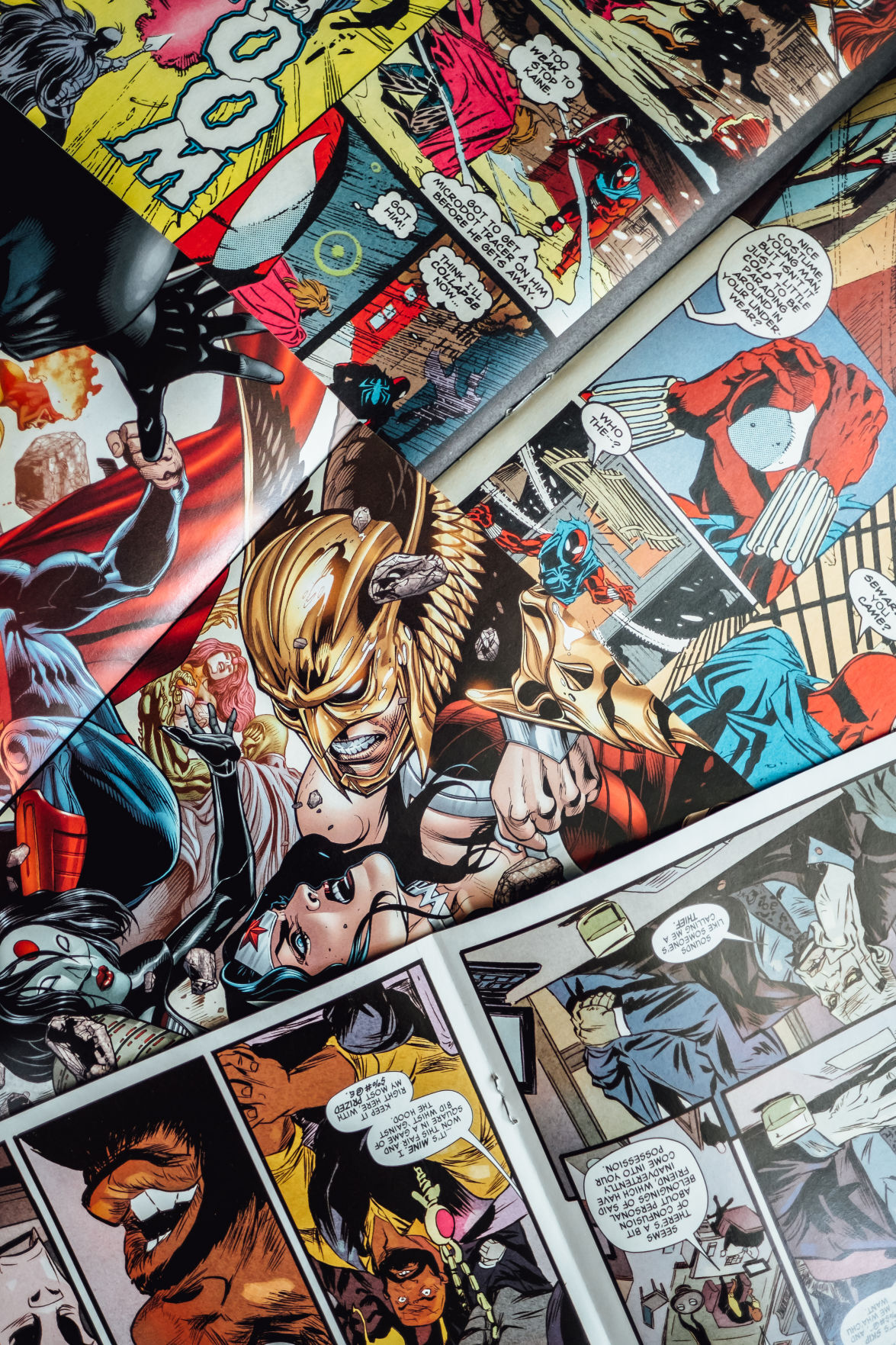
Marvel and DC comics. Open comic book, pages with heroes close up. background. High quality photo

The Incredible Hulk on display at the 鈥淢arvel: Universe of Super Heroes鈥� exhibit. (Antonio Perez/Chicago Tribune/TNS)

The Incredible Hulk and Thor at Grainger Court inside the Museum of Science and Industry. (Antonio Perez/Chicago Tribune/TNS)

Black Panther is featured at the 鈥淢arvel: Universe of Super Heroes鈥� exhibit at the Museum of Science and Industry. (Antonio Perez/Chicago Tribune/TNS)

The comic book Amazing Fantasy #15, which features the origin of Spider-Man on display at 鈥淢arvel: Universe of Super Heroes鈥� exhibit. (Antonio Perez/Chicago Tribune/TNS)
CHICAGO鈥斺�淢arvel: Universe of Super Heroes,鈥� the massive traveling exhibit now open at the Museum of Science and Industry, does a surprisingly evocative job of replicating our experiences with the Marvel Universe itself.
If you鈥檙e a tourist in this world鈥攜ou recognize the icons (Spider-Man, Hulk, et al), you鈥檝e seen a few films鈥攜ou can blow through in 30 minutes and come out with a perfectly breezy appreciation. Or you could spend a lifetime here, soaking in the legacy, sorting out 60 years of plot and character.
For those interested in pursuing the latter, here is a guide to some of the secret wars, the subtleties, the subtexts, rivalries and Easter eggs in 鈥淢arvel: Universe of Super Heroes鈥�:
1. The story: Marvel鈥檚 tale, in many ways, is an immigrant story鈥攕pecifically, an Eastern European story.
The show begins with a pair of quotations from Marvel鈥檚 most seminal architects, Stan Lee and Jack Kirby. Lee, a son of Romanian immigrants, says he based the Marvel Universe in New York because New York is what he knew; Kirby, whose parents settled on the Lower East Side after leaving Austria, says 鈥淚 don鈥檛 know where your father comes from, but where I came from, everybody was an immigrant.鈥�
Danny Fingeroth, a longtime editor of 鈥淪pider-Man鈥� who worked on the exhibit, said, 鈥淲e thought it was essential to remind people these characters were created by the descendants of Jewish refugees. Because the superhero concept itself is a paradox: Most superheroes are very much about maintaining the status quo in society, and yet Marvel superheroes are also outsiders who feel they never quite fit American society.鈥�
2.Iconic comic: In that first room of the exhibit, a copy of 鈥淢arvel Comics鈥� No. 1 from 1939 stands in a glass case. The show doesn鈥檛 mention it鈥檚 the most valuable Marvel comic, having sold for $1.26 million.
However, Benjamin Saunders, the University of Oregon English professor and Marvel historian who curated the show, is more excited by the single page of original art from the comic that hangs nearby. It鈥檚 actually a 鈥渉oly grail piece,鈥� he said, the only known surviving art of issue No. 1.
3. Finding Namor: Among the first images in the exhibit is the flood that Namor the Sub-Mariner unleashed on New York in an early comic. This panel, a contemporary photo-realistic recreation of a 1941 image, was made by Alex Ross, a longtime resident of the North Shore whose celebrated style often reframes vintage superhero comics as paintings.
4. Super selfies: One of the several selfie stations includes a full-size replica of the Thing from the Fantastic Four. He sits on a couch, beckoning you over. But look behind him鈥攖hat seemingly-static illustration in the window eventually moves. Gargantuan god Galactus stomps through Manhattan, Iron Man flies by, Spider-Man plops down.
5. Another thing about Thing: Saunders initially wanted him watching TV, his feet up on a coffee table. He settled for the Thing on a couch. Either way, the point comes across: The basis of the Marvel Universe, however extraordinary, is prosaic everyday existence.
6. 鈥楨chh鈥� exhibit: Look closely at the original art of 鈥淣ot Brand Echh,鈥� the Mad magazine-like comic that Marvel published briefly in the late 1960s to satirize itself.
In a panel spoofing Kirby, there鈥檚 a letter behind him signed 鈥淐armine.鈥� It鈥檚 a reference to Carmine Infantino, an editor at crosstown DC Comics who was forever trying to lure Kirby away from Marvel.
Not mentioned: Soon after this parody, DC did hire Kirby, who had grown tired of his lack of recognition, having been overshadowed for years by the infamously self-promoting Lee.
7. Due credit: Flowing through the exhibit is the enduring argument of who created what at Marvel.
This is probably the most sensitive question in superhero history. A decades-long saga made short: Though Lee is often thought to be the creator of Spider-Man, Hulk and the rest, Kirby (and others) had at least an equal hand. Kirby鈥檚 family spent years in legal battles with Marvel, settling just before the case headed to the U.S. Supreme Court. The exhibit ignores the lawsuits but does a nice job explaining 鈥渢he Marvel Method鈥� without stepping into ugly stuff. The Marvel Method, in short, begins with an idea, which goes to an artist, whose work then heads to a writer for dialogue. That鈥檚 not always true, of course. But the show does such a good job explaining the production cycle, the point is evident: No Marvel comic was ever created by one person. As Saunders said: 鈥淚t鈥檚 such a unique form of making comics, it renders our understanding of authorship inadequate. It was a mash (of people). When these characters were created, I doubt anyone thought the question of credit would matter.鈥�
8. Partly for those reasons, Saunders said Kirby receives 鈥渁s much physical space (in the exhibit) as Stan.鈥�
Two artifacts here to look for: A 鈥淗appy Hanukkah鈥� card from the Kirby family featuring the Thing in a yarmulke. (The Thing, who looks a bit like Kirby, is also Jewish.) Lee is represented by a 1947 book he wrote (鈥淪ecrets Behind the Comics鈥�) and magazine article (鈥淭here鈥檚 Money in Comics!鈥�), both spotlighting his role as ringleader. Ann Nocenti, a former Marvel editor/writer of Daredevil and X-Men comics who consulted on the show, told me: 鈥淚n a way, Stan became Marvel鈥檚 Ronald McDonald, but then, even if he鈥檚 thought to have gone a little credit mad, without the unrelenting cheerleading it鈥檚 possible Marvel would have never gotten off the ground.鈥�
9. One more legal matter: For years, Kirby had asked for his original art back from Marvel, and Marvel would not give most of it back. But eventually Marvel caved.
Since at least the mid-1980s, it鈥檚 been fairly routine for Marvel (and DC) to return original art to its creators. And that is why most of the original art at the exhibit does not come from Marvel. Instead, each is a loan from either a comic book collector or a Marvel artist.
10. Don鈥檛 pass the (very) small exhibit of Ant-Man鈥檚 lab, assuming its filler.
It only looks like this: Watch closely and, via cleverly inserted animation, Ant-Man and the Wasp soar into the room, marshaling a colony of ants and providing a little history of themselves.
11. The show is refreshingly upfront on trend chasing.
When Godzilla and 1950s monster movies take off, Marvel goes monster comic crazy. Even better: Look for art from 鈥淗omer Hooper鈥� (an Archie doppelganger) and 鈥淗omer the Happy Ghost鈥� (a Casper twin), both by Marvel, and both hilariously lazy intellectual-property land mines. (One more monster-comic note: Hanging above the Groot prop from 鈥淕uardians of the Galaxy鈥� is a comic book panel. The monster in it is the original treelike Groot, a bad alien who was defeated by termites.)
12. Among the props in the exhibit: Captain America鈥檚 shield (from 鈥淎vengers: Endgame鈥�), Black Panther鈥檚 suit, Cate Blanchett鈥檚 buck-like headdress (鈥淭hor: Ragnarok鈥�), and many others.
But there are no props, or costumes, or mutant movie items, from the X-Men films. That鈥檚 because 20th Century Fox made those movies and props, and not Marvel, which had licensed the film rights to the X-Men and Fantastic Four in the 1990s when Marvel (and other comic publishers) were in a nose-dive. (For the record, two years ago, after the exhibit was created, Disney, which owns Marvel, acquired 20th Century Fox, and so the X-Men film rights are now back with Marvel.)
13. Saunders said the show was not designed to preview any upcoming Marvel films or TV series, and that鈥檚 why there are only a couple of pieces of original art featuring Vision and Scarlet Witch, but no items from their blockbuster TV series, 鈥淲andaVision,鈥� which just had its season finale.
That said, it鈥檚 hard to overlook that Hawkeye, Black Widow and the martial arts hero Shang-Chi, all relatively minor Marvel characters, but with upcoming TV series and films, receive a somewhat outsized amount of attention.
14. A fun inclusion is the list of restrictions dictated by the once-mighty Comics Code Authority, which aimed to save young minds from harmful material. A comic, the Code said, must use 鈥済ood grammar,鈥� show unchecked respect for authority and avoid 鈥渨erewolfism.鈥�
15. Read the fine print of those Captain America ads from the 1940s, intended to help the war effort through fan-led paper drives and stamp sales.
Children could also purchase a 鈥淪entinels of Liberty Badge鈥� and鈥攅choing a certain contemporary strain of American politics鈥斺�渏oin the more than 10,000 red-blooded young Americans in a gallant crusade against the spies and traitors who attempt treason against our nation.鈥�
16. If you have ever wondered about some of the jobs listed in the credits of a comic book鈥攃olorist, letterer, etc.鈥攜ou have probably wondered what an 鈥渋nker鈥� actually does.
Is it just tracing over the pencil marks with ink? The exhibit has a terrific interactive screen that allows you to select various professional inkers, then trace over a comics page using a stylus, revealing the distinctive style that can be brought to the job.
17. Though the show doesn鈥檛 hammer this, some of the original art on display are key images in the endless Marvel saga鈥攖he death of Gwen Stacy, the addiction of Tony Stark, Hulk holding up stone lettering of the word 鈥淗ULK.鈥�
For comic book fans, it鈥檚 as if 鈥淎merican Gothic鈥� and 鈥淣ighthawks鈥� were off in a corner of the Art Institute, hanging behind some other stuff.
18. Some of the works being shown come from the personal collection of curator Saunders, including the comic panels reflected in the show鈥檚 Doctor Strange mirrors.
That said, Saunders, a native of Wales, teaches 16th and 17th century literature at the University of Oregon. He鈥檚 also the school鈥檚 director of its comics and cartooning studies minor. 鈥淎 lot of people have understood for a long time this is a medium whose time for serious study has come. Librarians stopped wondering decades ago. And yet, do a show like this, every now and then you run into people who can鈥檛 believe it. I鈥檓 kind of delighted by it. I always want to say, 鈥榃ow, people like you still exist! That is so cool!鈥欌��
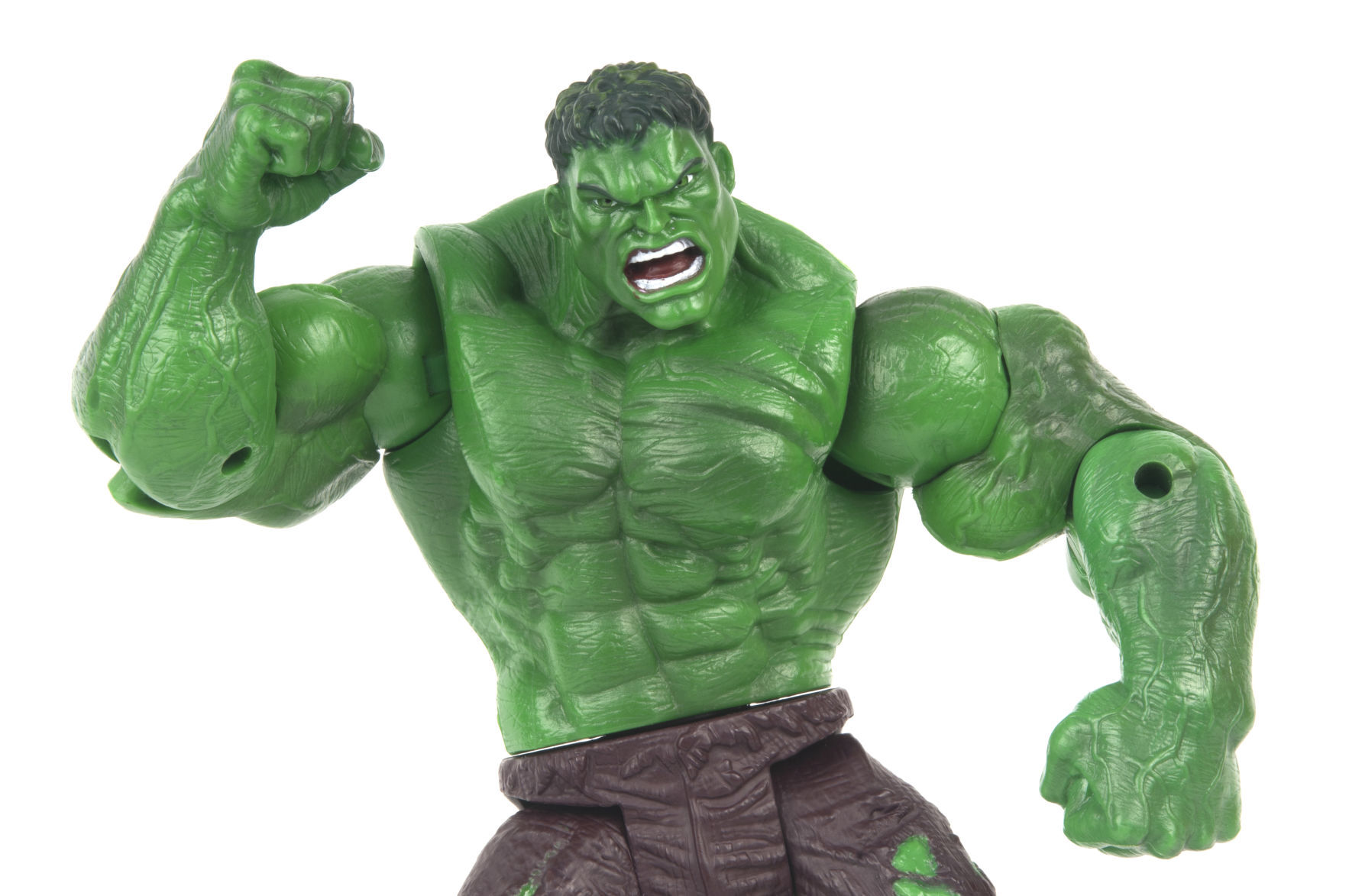
ADELAIDE AUSTRALIA - June 08 2015 : A studio shot of a Hulk action figure on a white background. Marvel toys are highly sought after collectables.

Passport with a map background.Travel planning.Top view of traveler accessories with a plane on world map.Preparation for travel.Traveling Journey Vacation Holiday concept.

front view of new yacht isolated on white

Roi Et, Thailand - March 15, 2021: The ADIDAS Alphatorsion Men\'s Running Shoes are running shoes that enhance your running day with special features that propel you forward with intense energy.