
Big foot kick businessman. Fired job. Business vector illustration
Employers responding to a survey about remote workers say they will fire employees if they don鈥檛 return to the office.
A new survey from Digital .com shows employers and employees are not on the same page when working from home.
Digital surveyed 1,500 small business owners.
Half of employees said most workers worked on-site full-time, 18% had a hybrid schedule for in-person/remote working. Thirty-eight percent said they had a primarily remote workforce and, as such, were eliminated from the rest of the survey.
According to the survey, a large portion of employers wants employees back in the office. Thirty-nine percent said they expect everyone to return to the office, 20% will let employees choose, and 17% will make hybrid schedules permanent.
Only 10% are making the switch to full-time remote work a permanent fixture.
Thirty-nine percent of employers said if employees don鈥檛 come back to work on-site, they will fire them.
Employers willing to fire employees for not returning had a variety of reasons; 49% said the job requires employees to be in the office because they can only do them in person. They cite better interaction with clients, better collaboration, and social aspects improving versus working from home. They also believe employee productivity has dropped with the move to remote work.
Employers most willing to fire workers belong to the IT, finance and advertising industries.
But, one expert is pushing back.
鈥淚t鈥檚 true that in-person, human interaction has tremendous value for certain types of teams ... but that鈥檚 old-school thinking. Remote work is just an extension of this existing trend, and companies that are stuck in an old mindset will be left behind,鈥� said Digital鈥檚 small business expert Dennis Consorte.
Consorte believes the pandemic didn鈥檛 bring about the shift to remote work but rather sped up the inevitable. He also thinks the move will cause small businesses to lose out on valued employees who 鈥渕ay seek out remote opportunities elsewhere.鈥�
Another possible roadblock to employers bringing employees back into the office is COVID-19 vaccinations.
Some 55% of employers said they are mandating mask-wearing at work, while 52% will enforce social distancing. According to the survey, 42% want employees fully vaccinated, and 54% are requiring it for anyone choosing to return to the office full-time.
Digital surveyed April 7-8 from a pool of 1,500 American small business owners.
Food fads come on and go. Remember the cabbage soup diet? The macrobiotic diet? Or my favorite: drinking man’s diet?
Many fad diets have been debunked as lacking in vital nutrients or just plain not sustainable for the long term. Some, however, are based on solid research and actually work. Good examples include the DASH diet (Dietary Approaches to Stop Hypertension) and the Mediterranean eating plan.
What about intermittent fasting?
Unlike some fad diets, this one has actually been studied, though most of the research to date is on animals.
Intermittent fasting is basically a way to lose weight by not eating (or eating very little) on certain days or fasting at certain times of the day. According to a review on the topic by registered dietitian and associate clinical professor Dana Angelo White of Quinnipiac University, one common method of intermittent fasting is to fast (consume no calories or very few) on certain days of the week alternated with other days of normal eating.
A modified version of this involves fasting say, two days a week (not in a row) and eating normally on the other five days.
Another popular version of intermittent fasting is to only eat during limited hours of the day. One example is the 16:8 plan; dieters go without calories for 16 hours a day and only eat during an eight-hour window. For instance, a person might eat between 8 a.m. and 4 p.m. or noon to 8 p.m. After that, stay out of the kitchen.
Some people like these plans because it’s easier to be all or nothing than to count calories every day.
But do they work?
While weight loss on these diets is similar over time to straight calorie counting, researchers have seen other benefits to not eating for longer time periods, especially during the evening and night hours.
For example, when we eat and fast in line with the body’s natural rhythm (basically eat when the sun is up and fast when it goes down), we may expect better control of our hunger, more loss of body fat and overall weight loss.
On alternate day fasting regimens, the days of complete fasting can be challenging, however. Research volunteers have reported feeling extremely hungry and irritable on fasting days, which may explain why we might not be willing to follow this pattern very long.
What about people with diabetes, who need to keep blood glucose levels from going dangerously high or low? Experts generally discourage people with Type 1 or Type 2 diabetes who require insulin from following an intermittent fasting plan. Others who shouldn’t attempt extended fasting include individuals who suffer with hypoglycemia (low blood sugar), pregnant or breastfeeding women and people who need to take medications with food.
Best advice as we wait for more human studies to emerge? Consult with your medical provider and a skilled nutrition professional to make sure you know what you’re doing before embarking on an intermittent fast.
Barbara Quinn-Intermill is a registered dietitian and certified diabetes educator affiliated with Community Hospital of the Monterey Peninsula. She is the author of “Quinn-Essential Nutrition.” Email her at barbara@quinnessential .
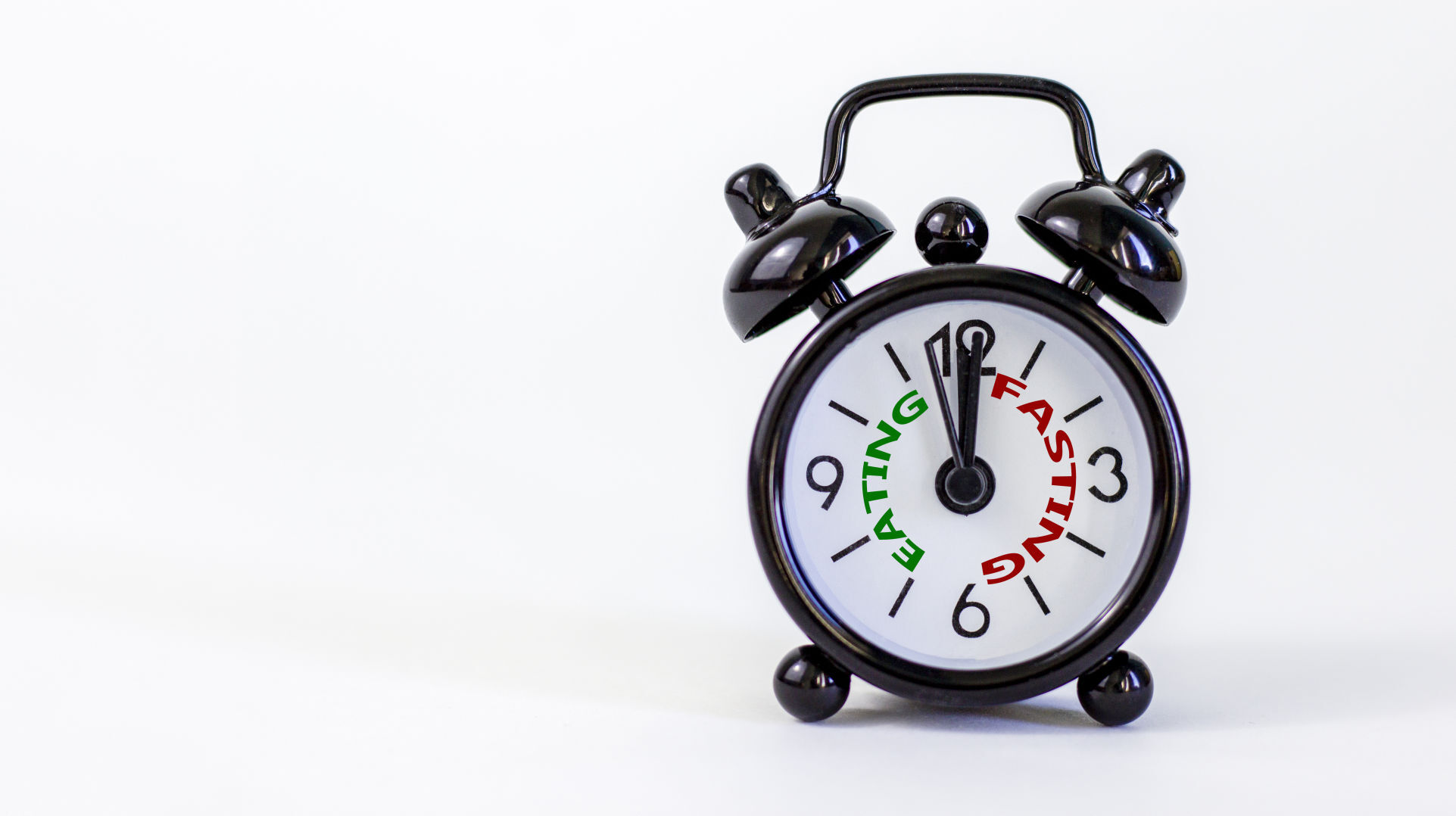
Time to fasting symbol. Beautiful black alarm clock with words \'eating fasting\'. Beautiful white background. Copy space. Healthy eating, medical and time to fasting concept.