
EDGERTON 鈥� Fifty years ago, Japanese animators toured author Sterling North鈥檚 former home in Edgerton to research North鈥檚 book about a boy and his raccoon, 鈥淩ascal.鈥� The animators鈥� research yielded what over the next half century would become one of Japan鈥檚 biggest cultural successes.
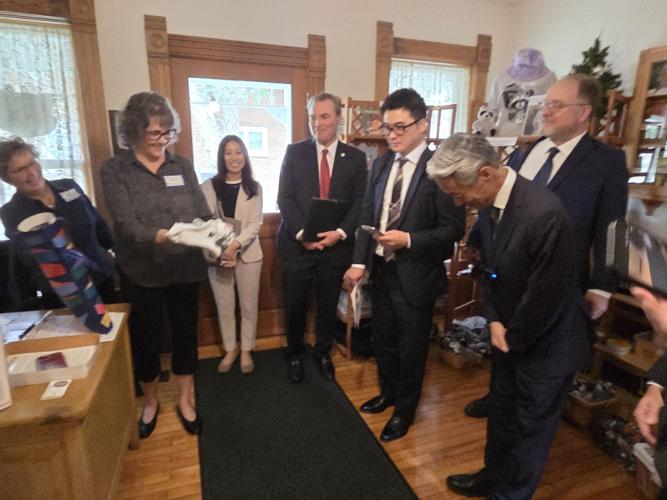
Last week, on Friday, Japan returned. This time, it was Japanese Ambassador Shigeo Yamada who paid a visit to North鈥檚 home, now the Sterling North Museum.
Yamada had initially come to visit Wisconsin for the grand opening of , celebrating the new facility, which is now one of the largest soy sauce production facilities in the world.
The ambassador took time away from the festivities in Jefferson to tour the Sterling North Museum, but it was more than a sidetrack.
鈥淩ascal鈥� author North wrote the book about his time growing up with a in Edgerton. It鈥檚 a well-known book in the U.S., a perennial favorite that鈥檚 been read aloud to generations of elementary school students in American classrooms.
But in Japan, 鈥淩ascal鈥� has become more than well known. The story of boy-meets-raccoon is revered on the island country as a piece of iconography, an entity woven into the fabric of Japanese culture 鈥� as pervasive and enduring as the American cartoon 鈥淪cooby-Doo鈥� has been in U.S. pop culture.
North鈥檚 鈥淩ascal鈥� was adapted as a 1969 Disney film. Years later, in 1977, the Japanese animators who toured North鈥檚 Edgerton home adapted the book to a Japanese anime cartoon.
What came from the anime 鈥淩ascal鈥� was a cultural phenomenon in Japan that endures today. As of this year, the 鈥淩ascal鈥� series is still broadcast on Japanese TV. 鈥淩ascal鈥� merchandise is still sold there.
The Sterling North Society reports hundreds of Japanese visitors make the pilgrimage annually.
Yamada, the ambassador, first saw the series as an adult. He said the Japanese 鈥淩ascal鈥� celebrates his culture鈥檚 love of nature.
鈥淲hat I think struck the Japanese people was the friendship between the main character, with Rascal and many other animals,鈥� Yamada said. 鈥淚 think the Japanese people like that sort of connection with animals, connection with nature. That is something that we have in common between Japanese people and people in Wisconsin.鈥�
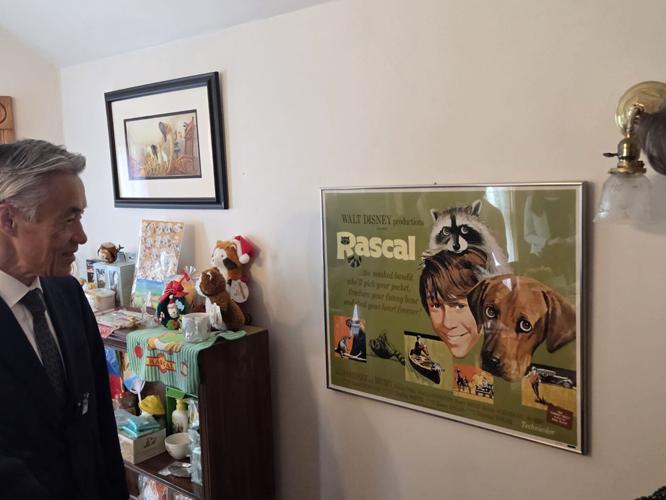
On a tour of North鈥檚 home, Yamada learned about the history of Sterling North and 鈥淩ascal.鈥� On the second floor, the ambassador saw a movie poster of the 1969 U.S. film adaptation.
He also posed for photographs with Sterling North Society members, Japan America Society of Wisconsin members, and with a stuffed, plush raccoon toy.
Tour guide Trudy Spike asked Yamada if he knew 鈥淩ascal鈥� was a Disney film.
鈥淚 didn鈥檛 know!鈥� Yamada exclaimed.
Yamada was given gifts from the museum, including a Sterling North t-shirt.
鈥淚 have to wear this when I run,鈥� Yamada said, alluding to his 10-mile runs near his home in Japan.
Yamada confessed that he hadn鈥檛 known 鈥淩ascal鈥檚鈥� story originated in Edgerton. He said he hopes more awareness can be built over the story鈥檚 origin.
鈥淚鈥檓 sure more Japanese people will have much stronger interest in coming here and experiencing the nature and sort of a friendship, not only with Rascal the raccoon, but with people in this area,鈥� Yamada said.
Yamada represented the Japanese government as the Japan America Society of Wisconsin donated 113 books to the Edgerton Public Library.
鈥淚 hope these books will be passed from one generation to another,鈥� Yamada said.