


JANESVILLE
A new Rock County program takes its cue from national efforts to eliminate bias from criminal proceedings. It could lead to more offenders seeing their cases dismissed.
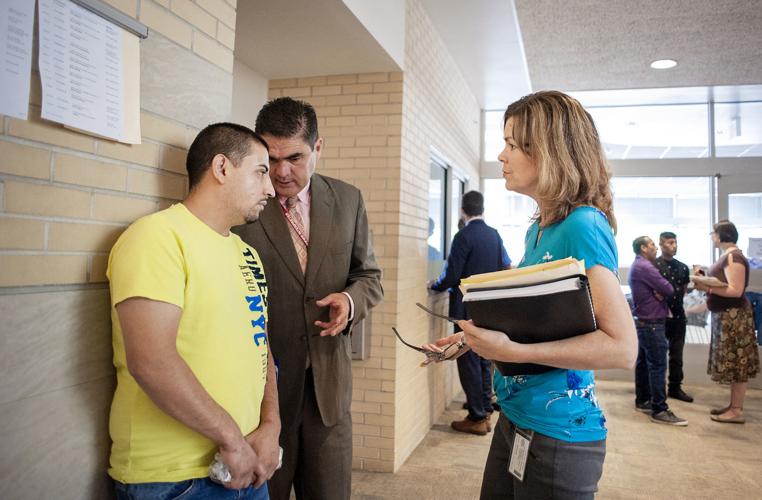
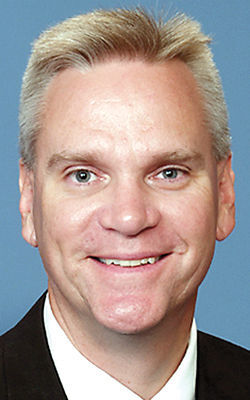
Rock County District Attorney David O鈥橪eary also hopes it will save the cost of court proceedings and free his prosecutors to give more of their attention to the most serious cases.
The district attorney鈥檚 office has run a program for about 40 years called deferred prosecution, which offered first-time offenders in low-level crimes the option of getting their charges dismissed.
About 65 people per year got their cases dismissed or had charges amended to a noncriminal citation through deferred prosecution, said program Director Gina Ciaramita.
They were arrested for shoplifting, drug paraphernalia, possession of marijuana and the like.
O鈥橪eary and Ciaramita said they hope many more people get the same result through the new Rock County Diversion Program.
(The program should not be confused with the Rock County Sheriff鈥檚 Office鈥檚 diversion program, which allows people to serve jail sentences outside the jail while wearing monitoring bracelets.)
鈥淚t鈥檚 sort of an early intervention, before they get too involved in the criminal justice system,鈥� O鈥橪eary said.
A major difference is that the new program will be open to a wider range of offenses and not only to first-time offenders.
People will not be eligible if they are accused of operating while intoxicated, firearms offenses, domestic violence, certain drug offenses, felony sex offenses, some violent crimes and public welfare and entitlement charges.
The focus is on participants鈥� likelihood to commit more crimes. That likelihood will be measured by a short questionnaire, called an assessment tool.
Officials could not divulge the questions because they are the property of the company that sells the questionnaires, but the questions have been validated through research to assess the likelihood the person will commit another crime.
The questions focus on the person鈥檚 criminal history, attitudes, alcohol/drug problems, family, companions, emotional/personal characteristics, and education and employment history.
The tool is also intended to weed out conscious or unconscious bias, O鈥橪eary said.
That鈥檚 because blacks and other minorities are imprisoned in numbers that are out of proportion to their percentage of the population.
O鈥橪eary recalled attending a national training on this topic about five years ago, when officials from around the country asked him why Wisconsin led the country in disproportionate incarceration, 鈥渁nd I didn鈥檛 have an answer, so that鈥檚 kind of what we鈥檝e been researching and analyzing in our system.鈥�
Bias can enter the decision-making when the neighbor who reports a crime is biased, if the arresting officer is biased, or if a prosecutor or judge is biased, O鈥橪eary said.
Offenders who qualify will agree to pay restitution if applicable, attend one short education session and remain crime-free for two to three months.
The education session will be a talk given by diversion staff. Eventually, participants will watch a video.
Part of the instruction shows the offenders what happens when their cases are entered on the online court-records system known as CCAP: Potential landlords, employers and colleges will look at that record, O鈥橪eary said.
The process is simple and seems easy, but research shows most people at low risk for re-offending don鈥檛 need a lot of help and are self-correcting, said Elizabeth Pohlman McQuillen, Rock County justice assistance manager.
鈥淣inety-five percent of the people in that low-risk group are so mortified at having come into the criminal justice system, they鈥檙e never going to come back,鈥� O鈥橪eary said.
Getting these low-risk people out of the system quickly is a very good thing for society, research shows: The more they are involved with police, courts and jail, the more they are exposed to higher-risk people, which makes them more likely to commit more crimes, Pohlman McQuillen said.
The program will not charge a fee, so people with low incomes will be able to benefit.
The program won鈥檛 clear a person鈥檚 case from the state鈥檚 public, online court-records system immediately. The charges will disappear after two years, Pohlman-McQuillen said.
Pohlman McQuillen noted that a conviction, even for a low-level crime, can keep a person from getting an apartment or a job. Convictions also can mean contact with high-risk criminals, which can lead the low-risk person into crime, research shows.
The goal is to stop doing things that can, in the end, make society worse, Pohlman McQuillen said, but to still hold offenders accountable.
The program started June 10. Plans are to see if the program truly reduces the number of people committing new crimes.
O鈥橪eary credited the county board and County Administrator Josh Smith with providing funding for experts to analyze the data.
The program is the product of the local Evidence-Based Decision Making group that involves judges, corrections officials, prosecutors, police and others and which O鈥橪eary leads on the state and local levels.
Once the diversion program gets going, the Rock County Evidence-Based Decision Making team plans a similar program for medium-risk offenders that will be called deferred prosecution. Details of that program are still being worked out.