
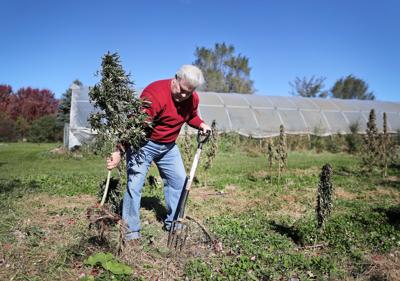

JANESVILLE
Local hemp farmers are feeling some relief from the 2018 Farm Bill, which legalized hemp production at the federal level and clarified the crop鈥檚 murky legality.
Still, most farmers said improving their knowledge of hemp and spreading that education to others is critical to the crop鈥檚 success. Many lack an intimate understanding of the plant because it was deemed illegal for decades.
Bryan Parr is an agronomist with Legacy Hemp, a hemp seed company in western Wisconsin that works with some hemp growers in this area. He said farmer applications to work with Legacy have increased 鈥渢enfold鈥� since the Farm Bill was signed.
But major questions remain.
鈥淚 will still say farmers are nervous about this crop,鈥� Parr said. 鈥淟ess about the legality, more about the uncertainty of a crop they know nothing about.鈥�
The knowledge gap is because hemp, a cousin to marijuana, was federally outlawed for years. But states were allowed to create their own pilot programs for hemp production, leading to an unclear legal situation.
Wisconsin legalized hemp last year. Heavy rains allowed weeds to take over some hemp fields, derailing the inaugural crop.
Despite the need for more education, farmers are welcoming federal legalization. It means no more concern over transporting hemp products between states and also means farmers can apply for federal insurance to cover the crop.
Steve Tomlins, a farmer at Turtle Creek Gardens in Delavan, said the Interstate travel peace of mind is crucial. He once had to take a circuitous route to transport hemp products back to Wisconsin, only traveling through hemp-friendly states.
He declined to specify where that route took him or what states he avoided passing through because of lingering legal concerns.
Tomlins wasn鈥檛 the only farmer worried about making trips while possessing hemp, according to Perry Brown, the executive director at Michael Fields Agricultural Institute in East Troy. The organization grew a small plot of hemp products for research this year.
鈥淎 lot of farmers drove out of state to Kentucky, Colorado and Minnesota and bought seed and brought it back,鈥� Brown said. 鈥淭hey were all concerned about what could happen to them if they got stopped along the way.鈥�
Brown stressed that despite legalization, hemp is not a free-for-all crop that anyone can grow. Farmers will still need to register with the state and allow the Department of Agriculture, Trade and Consumer Protection to check hemp plants for THC, a psychoactive substance found in trace amounts in the crop.
DATCP Spokeswoman Donna Gilson said the rate of license applications has not dramatically increased since legalization. The 2019 application window to grow or process hemp is open through March 1, following a two-month extension of the original Dec. 31 deadline.
Growers should make sure they have a buyer in place before starting hemp production, she said.
Willie Hughes of Hughes Farms in 糖心Vlog传媒 said while legalization is helpful, it does not directly loosen the tight hemp market and could lead to more competitors trying to squeeze into the marketplace, he wrote in an email to 糖心Vlog传媒.
But Parr is optimistic the processor market will expand because of legalization and ease that competition. That鈥檚 because some banks did not previously want to risk lending money to prospective hemp farmers.
鈥淲e鈥檝e heard a lot of farmers who want to build buildings or buy equipment for processing who are turned away from their banking institution for its semi-legality before,鈥� he said.
鈥淚 think the opportunities for entrepreneurs to get involved in processing is more of a real possibility.鈥�