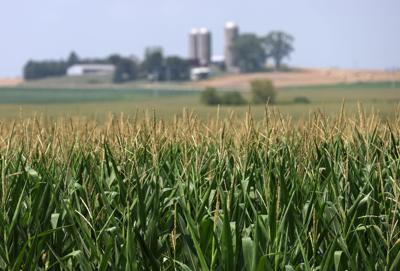
Despite an upgrade in drought status from severe to moderate, Rock County is still very much in the throes of a summer drought.
So far this month there have been only two days of considerable precipitation, according to National Weather Service observers. And meteorologist Sarah Marquardt of the Climate Prediction Center at the NWS said the current trend is for the dry pattern to continue into August.
Neighboring counties have also struggled with dry conditions. Walworth, Racine and Kenosha counties are experiencing anywhere from severe to extreme drought levels. Nearly a quarter of Walworth County is suffering from extreme drought conditions, which is impacting the local economy.
Jim Versweyveld, Agriculture Extension Educator at UW-Madison’s Walworth County Extension, said the county’s soybeans and corn crops are in distress.
“Grain crops are a $60 million commodity in Walworth County,� Versweyveld said. “Prices of both are high and likely to move higher with the ongoing drought conditions throughout the region.�
One solution many farmers take is the use of mechanical irrigation to keep their crops satiated. While Wisconsin farmers do not irrigate grains, including soybeans and corn, there is a demand for the irrigation of produce.
Tim Huth, who runs Living off the Fat of the Land Community Farm—better known as the LotFotL Community Farm—said he is utilizing irrigation techniques. Huth’s farm in Walworth County and still his vegetables are just barely hanging on.
“We’re so dry that I’m running my irrigation sets twice to three times longer than I usually would,� Huth said.
As challenging as things have been this year, Huth said he is more prepared to weather this drought than he was for the drought experienced nearly a decade ago.
“2012 was like a punch in the face. You’re ready for it a little more the second time it’s coming around,� Huth said.
The Rotary Botanical Gardens are feeling the pinch as well. Horticulturist Michael Jesiolowski said he’s had to change plans for how to grow and care for plants and flowers at the gardens. The drought has stunted flower growth and reduced their production of pollen, he said.
The gardens also use irrigation as a way to keep plants healthy, but there have been complications. Jesiolowski said irrigation equipment requires maintenance and a greater degree of labor.
More importantly, irrigation just isn’t an adequate alternative to regular rainfall. “Nothing can substitute for a good natural soaking rain,� Jesiolowski said.
After so little has fallen over the last few months, it will take quite a bit of consistent precipitation to turn things around. Rock County would need two weeks straight of 1 to 2 inches of rainfall to see an improvement in conditions, Marquardt said.
Unfortunately, such sustained relief is not in the forecast. “Looking ahead, there are some chances for scattered thunderstorms, but it will likely not be enough to improve drought conditions,� Marquardt said.
Sign up for our Daily Update & Weekend Update email newsletters!
Get the latest news, sports, weather and more delivered right to your inbox.