

EVANSVILLE — It’s been six months since an unprecedented February tornado tore through the Evansville area. People in the area still are picking up the pieces.
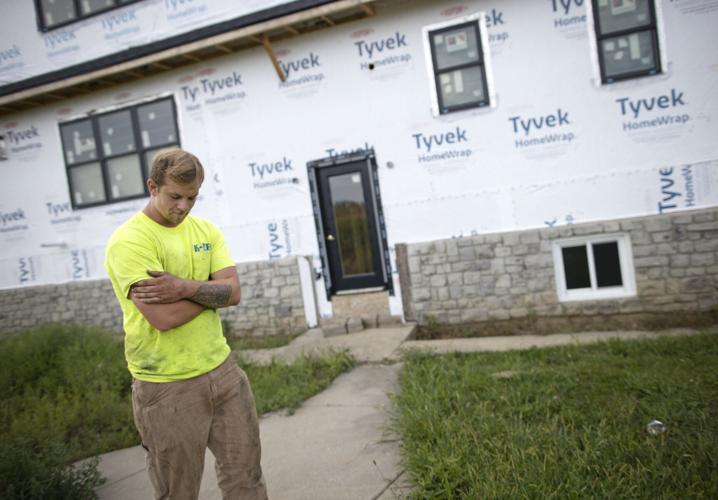
Town of Porter resident Matt Artis took shelter in a bathroom with his disabled mother. He recalls a loud bang as the roof came off, and another bang as the front of his house was ripped away.
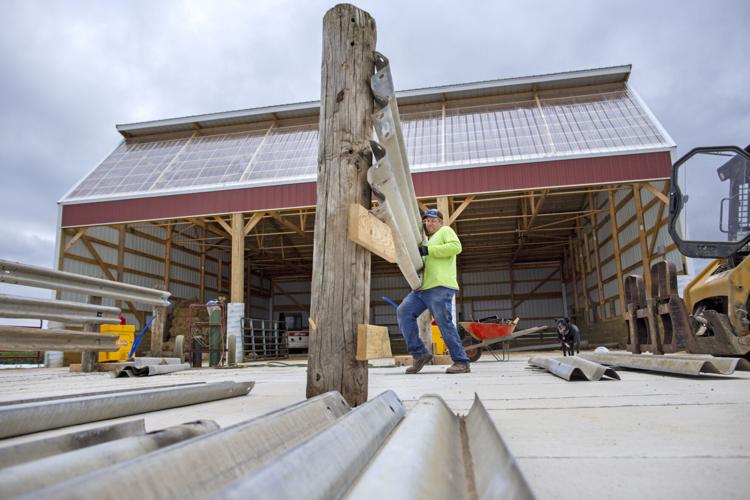
He would soon learn that two barns were destroyed and his cattle were gone.
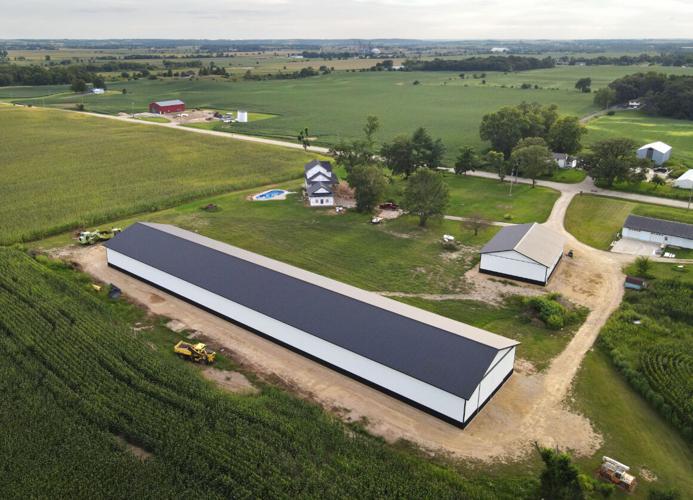
In all in the Evansville area, four homes were destroyed on Feb. 8 by what the National Weather Service said was a high-end EF-2 tornado with winds of up to 135 miles per hour. Various reports have said anywhere from 20 to 40 properties were damaged.
The National Weather Service also later confirmed that an EF-1 tornado hit Albany with winds of up to 110 miles per hour, 12 miles to the southwest of Evansville, in Green County. They were the first-ever reported tornadoes in February in the state of Wisconsin, according to the National Weather Service.
Artis says he hasn’t been able to live in his home since. His mother went into assisted living, and was diagnosed with leukemia before passing away last month.
A recovery task force was created after the storm. It came before the Rock County Board in May to ask for COVID-era American Rescue Plan Act (ARPA) funds, to help fund ongoing recovery efforts.
Damage estimates
The preliminary local damage estimate was $2.4 million. The task force has challenged that number based on information it has gathered from insurance companies and area residents.
Task force member Sarah Tachon told the county board in May it puts the damage estimate at more like $24 million.
She said some homes were leveled and some deemed inhabitable, and some families are still displaced.
She said some homeowners had insurance coverage but did not qualify for national disaster relief funds, noting that one farmer she spoke with lost most of his equipment and as a result is being forced into early retirement.
The task force continued over the course of the summer to come before the county board to share stories to demonstrated the potential impact of ARPA funds.
The county board voted on Aug. 8 to allocate $625,000 to tornado recovery in the Evansville area, a decision Tachon said the task force was “thrilled� to hear.
Immediate aftermath
In an interview last week, Artis said navigating the insurance claim process has been difficult, due to how the agent originally insured his property and belongings.
“Some things were insured good, some things weren’t, because it was saving me money. In the long run, now, it’s costing me money,� he said.
He said the estimated cost to rebuild his home and barns is about $500,000. He said he’s worked to get that cost down by doing the labor himself, with borrowed equipment, “hauling gravel in myself and everything.�
“I am very fortunate that I have family and friends that have helped me,� he said. “Not everybody’s that fortunate.�
He said he’s not hopeful that ARPA will cover much of his costs, although it will help some.
“It gets divided up between the people who apply,� Artis said. “But any dollar will help.�
Barbara Miller lives across the road from Artis, separated by a cornfield. Her home escaped serious damage, while her barn saw some roof damage. She also had tree damage.
Miller didn’t realize until three days after the storm that the roof of her barn had been lifted off the rafters. She said she and her husband weren’t prepared for the coming struggle to just get an insurance agent to come out and assess the damage and to draw up an estimate.
The lesson, she said, was the importance of knowing what coverage you have before you need it.
Don’t wait to do that “when you have a claim, when you have damage,� she said. “Go to that page of exclusions and be sure every one of those is addressed so that you aren’t surprised.�
She thanked the task force, calling its efforts “admirable� and “one of the benefits of living in a small town.� She said she got to know her neighbors better through that recovery effort.
“I’ve never met (task force member) Austin (Schmelzer) and probably never would have if it wasn’t for this,� she said.
Ongoing mental toll
Artis admits he’s “still a little nervous� when severe storms blow through.
He reminds himself that the chance of living through a tornado again isn’t likely in his lifetime.
“I should be safe from now on,� he said. “It can’t happen twice.�
He plans to rebuild his home so it’s solid and able to withstand that kind of force of nature if needed.
He said with the tornado and then losing his mom, that the year has been stressful is an understatement.
“It’s been depressing at times. But with time it’s gotten better. It’s just one of those things that you basically have got to live through and keep moving on.�
He agreed with Miller that the silver lining of the disaster was that it brought the Evansville community together, to help and lean on each other.
“There’s people here from all over that helped me, and I don’t even know. It’s just more or less word of mouth and people being generous,� he said.
He said the tornado has changed the way he thinks about budgeting, dealing with contractors and planning for the future.
Miller said the long-term emotional toll remains, “like you throw a pebble in the pond and all these ripples. You don’t see them all at once.�
She said she didn’t sleep for two nights after the tornado.
“My eyes would shut and I’d start to drift off and I’d wake back up,� she said “Any kind of sound was so scary.�
Now, she said she’s hyper-fixated on the weather before any approaching storm, listening to the weather radio and watching outside, anticipating the bad things that could happen.
She said she never used to be like that.


