This website uses certain cookies, pixels and similar tracking technologies in order enhance site navigation, analyze site usage, and assist in our marketing efforts.
Certain information collected by that technology may be shared with our third party partners.
By continuing to use this website, you agree to the use of these technologies.
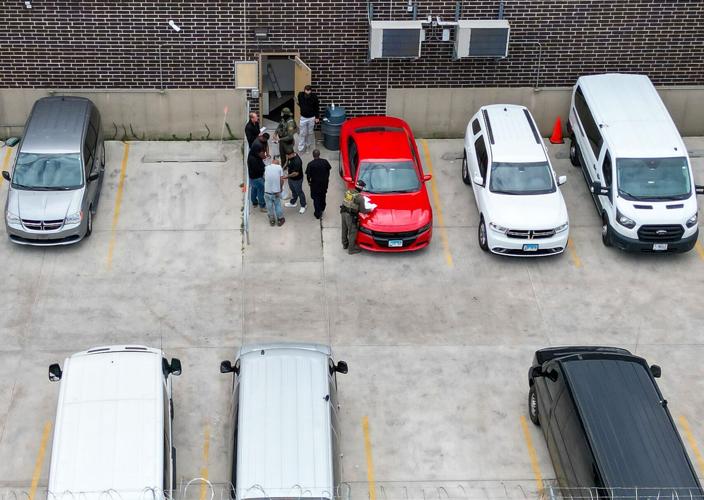
Detainees put items into clear plastic bags given to them by masked federal agents near an exterior door at the U.S. Immigration and Customs Enforcement holding facility in Broadview on Oct. 13, 2025.Â
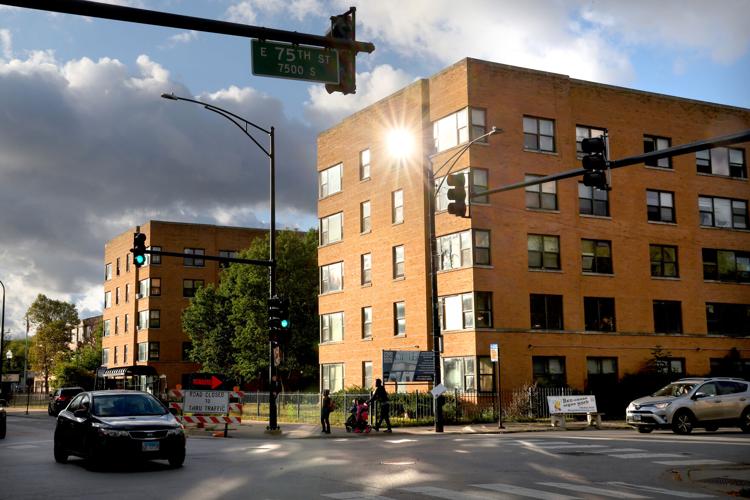
The building at 7500 S. South Shore Drive has lost many of its former tenants following a recent large scale raid by U.S. Immigration and Customs Enforcement agents in Chicago, Monday, Oct. 8, 2025.Â
CHICAGO -- The federal government knew it had wrongfully arrested Henry Cordova Jaya.
He had been detained by immigration agents last year during President Donald Trump’s ramped-up immigration enforcement raids in violation of a court order restricting warrantless arrests.
Detainees put items into clear plastic bags given to them by masked federal agents near an exterior door at the U.S. Immigration and Customs Enforcement holding facility in Broadview on Oct. 13, 2025.Â
Stacey Wescott/Chicago Tribune/TNS
In January, the government acknowledged that his arrest was a violation of the 2022 Castañon Nava consent decree. In early February, lawyers for the federal government said in a court filing that they were seeking Cordova Jaya’s release from custody.
But instead of releasing Cordova Jaya, the government kept him in detention for 18 more days and then sent him back to Ecuador, according to a new filing in federal court.
At least 70 other immigrants detained last year were also forced to leave the country after signing voluntary departure forms, receiving removal orders — even after, in some cases — the government acknowledged they had been wrongfully detained, according to the National Immigrant Justice Center, which spearheaded the federal case.
“Hundreds, if not thousands,� of people arrested in the Chicago area could have ultimately been found eligible for release, based on the total number of arrests, but the U.S. government failed to provide their records in a timely manner to determine whether they were class members, said Allena Martin, senior litigation attorney at the National Immigrant Justice Center.
Only about 100 immigrants have been released in the months since the judge ordered in November that hundreds of cases be reviewed, forcing the federal government to provide the information.
Last week, the federal government released 14 detainees who were wrongfully detained. But hundreds more immigrants arrested during large-scale enforcement operations in the Chicago area may have been entitled to relief under the federal court order. Yet, many were deported or left the country before their cases could be reviewed.
And those numbers represent only a fraction of the potential cases. Government officials told the Tribune last month it had arrested more than 5,000 people during Operation Midway Blitz. The review of alleged consent decree violations covers arrests dating back to June.
Attorneys working to identify violations of the federal consent decree say the process has been slowed by delays in receiving arrest records from the government, creating what they describe as a race against time for people stuck in detention.
The slow pace left many detainees facing an impossible choice: remain in detention for an unknown amount of time or leave the country.
“Unfortunately, it’s really just been like a battle against time,� Martin said.
“A lot of people just had to make really hard decisions,� she added, explaining that some detainees chose voluntary departure rather than wait indefinitely behind bars.
In a statement, Homeland Security said it “is complying with all lawful court orders� and will continue to “unapologetically enforce the laws of our nation.� The department did not address questions about Jaya.
“He kept going to court. It was one court after another, and he kept going, but the judge didn’t even review his paperwork,� Lopez said. “They would just look over and say we’re going to schedule it for next month … again next month.�
Family members wrote letters in his support and tried to help from the outside, but nothing worked. He spent nearly eight months in detention fighting the case.
“We did everything we could on our end,� Lopez said.
But the long wait and uncertainty inside detention eventually took a toll.
The building at 7500 S. South Shore Drive has lost many of its former tenants following a recent large scale raid by U.S. Immigration and Customs Enforcement agents in Chicago, Monday, Oct. 8, 2025.Â
Antonio Perez/Chicago Tribune/TNS
“He knows how to fight. He knows how to survive it,� Lopez said. “Wherever you put him, he’s always gonna come out on top of everything.�
For his family, the timing is difficult to accept, knowing that the court order granting release came after he had already left.
But knowing where he is and that he is finally free gives the family, especially his mother, some peace, Lopez said.
After all, they spent months looking for him after the South Shore raid, where agents in military gear burst through doors and zip-tied residents regardless of citizenship. Federal authorities said they were targeting gang members and violent criminals.
He worked as a pizza delivery driver, and the night of the raid, he had called off work, fearing he would be arrested. It was a time when Border Patrol Cmdr. Gregory Bovino and his squad were in town conducting enforcement operations.
After that, he spent nearly eight months at the Hopkins County Jail in Madisonville, Kentucky, about 330 miles south of his old home in South Shore.
Family members insist Pepe has no ties to criminal activity or any affiliation with a gang. A Tribune search found no criminal charges in his name, and his cousin described him as “a hardworking man.�
The other man arrested in the South Shore raid, Jeikson Delgado, who was ordered released last week, has actually been free since November through a habeas corpus petition, according to Martin. The habeas corpus is filed in federal court and challenges the legality of the arrest.
“The first problem was the government hadn’t produced the records they were supposed to have produced and so the process couldn’t be started until we had those,� Martin said.
Martin said attorneys can only begin reviewing cases once the federal government provides arrest records. From there, lawyers analyze each arrest to determine whether it violated the consent decree and then present those findings to the government.
“As soon as we got those records we started reviewing them and presenting them to the government as violations,� Martin said.
If the government disputes those findings, the issue must be taken to court, a process that adds additional motions, written responses and delays.
This week’s developments in court stem from a yearslong legal battle that has seen a number of twists and turns.
At issue is a 2022 consent decree known as the Castañon Nava agreement, which bars agents from making warrantless immigration arrests unless they have probable cause to believe someone is in the U.S. unlawfully and that the person is a flight risk.
It was originally supposed to sunset in March 2025. Instead, after the second Trump administration began ramping up immigration enforcement efforts in January 2025, lawyers for the National Immigrant Justice Center and ACLU alleged dozens of violations, mostly involving “collateral arrests,� or the detaining of individuals who are not targets.
In an Oct. 7 order extending the consent decree until February, U.S. Judge Jeffrey Cummings said Immigration and Customs Enforcement had improperly told its field offices over the summer that the consent decree had been canceled. He called into question the September immigration raid on the South Shore apartment building.
Cummings also took particular issue with a practice by ICE agents of carrying blank I-200 warrant forms with them on missions and filling them out at the scene.
In the fall, Cummings ordered agents to release hundreds of individuals from ICE custody who were improperly detained. An appellate court ruled in a split decision that Cummings overstepped his authority in ordering the release of people arrested with “I-200� warrants that agents filled out in the field.
The appeals court also said Cummings also erred in issuing a blanket order granting bond to other detainees who’d been arrested without judicially approved warrants, saying that each individual needed to be assessed for potential danger to the community.
In his ruling, Cummings found that in case after case, agents conducting immigration enforcement during Operation Midway Blitz had either not provided justification for their assessment of flight risk or filed faulty field warrants.
And as lawyers continue reviewing records one case at a time, advocates say the clock keeps ticking, not just on legal filings, but on the lives of families who may never see those cases resolved.
Sign up for our Daily Update & Weekend Update email newsletters!
Get the latest news, sports, weather and more delivered right to your inbox.