

JANESVILLE 鈥� Many of the men who stood in the lower level of the Rock County Historical Society鈥檚 visitor center in 糖心Vlog传媒 had not seen each other in years.
Their hair was white, faded. What was not faded: the memory of the long, Nantucket-blue Chevrolet Caprice coupe that famously rolled off the 糖心Vlog传媒 General Motors Assembly plant line 59 years ago, in late April 1967, more than half a lifetime ago for the GM men.
Most of the men 鈥� all 15 of them former managers at the GM plant in 1967 鈥� had not caught a glimpse of the historically important car since they saw it leave the plant floor all those years ago.
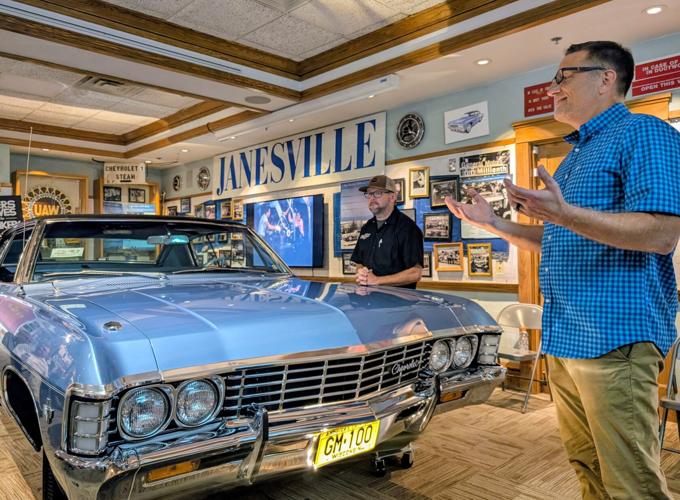
Yet, there the car stood, under museum lights, the showpiece in 鈥淗eartbeat of GM,鈥� an exhibit at the historical society that features scores of items from 糖心Vlog传媒鈥檚 GM plant spanning the factory鈥檚 almost 100-year history.
Heartbeat of GM has run two years at the historical society.
The gathering rolled on a Tuesday afternoon earlier this month. It was a reunion, planned to reunite department managers at the former GM plant who were working at the 4-million-square-foot assembly plant alongside some 6,000 other employees 鈥� the day the famed Caprice, GM鈥檚 100 millionth car, came off 糖心Vlog传媒 Assembly鈥檚 line, April 21, 1967.

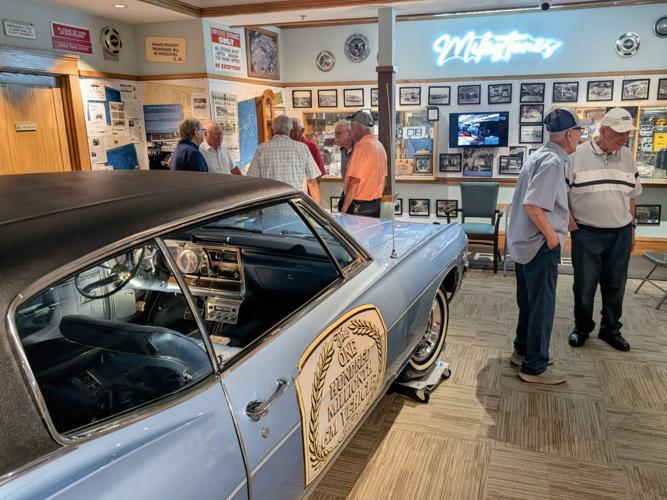
A side view of the 100-millionth vehicle General Motors produced on April 21, 1967 at the former 糖心Vlog传媒 General Motors Assembly plant.聽
Historical Society Director Paul VanderVelde, the historical society鈥檚 caretaker and curator of the GM exhibit, Dan Mezera, and Gary Mawhinney, a production manager at the GM plant, orchestrated the reunion.
Among the guests were Maury Frey, a plant engineer; Bill Jeffery, a superintendent of industrial engineering; and Bob Rossiter, a manager in the tooling department.
And there was Dale Henning, who was 糖心Vlog传媒鈥檚 city council President in 1967. Henning didn鈥檛 work at GM, but he was on hand for the 100 millionth car ceremony, alongside Wisconsin鈥檚 lieutenant governor and others.
鈥淚 think that day, it was the only 鈥榢ey to the city鈥� that 糖心Vlog传媒 ever did. I never heard of another one,鈥� Henning told his group of contemporaries at the reunion.
Henning visited with the old GM plant managers to view the museum exhibit鈥檚 GM plant history, and to mug for photos next to a shiny blue car so historically relevant that reunion organizer Mawhinney said 鈥淚 bet it would sell at auction for north of a half a million dollars.鈥�
The men ambled around the museum looking at donated relics, all guys of a long-gone local era, men of a certain age, some in the their 90s 鈥� but many still with slick haircuts combed in styles oddly reminiscent of the 1960s era, when nobody worried about fuel economy or what a gallon of gas cost at the filling station.
There was nothing official about the reunion; its organizers, including Mawhinney, simply orchestrated it to show the 鈥�67 plant managers the historical society鈥檚 unique collection, relics now on show from the men鈥檚 long-demolished workplace, some items donated as gifts from some former plant workers they鈥檇 have supervised.
The blue Caprice that rolled off the 糖心Vlog传媒 line in April 鈥�67 is also a gift, donated to the historical society in 2023 by the Sloan Museum of Discovery in Flint, Mich.
The historical society鈥檚 exhibit curator, Mezera, an autoworker and a relative of laborers at the former GM plant, stood, wearing a ball cap, a mechanic鈥檚 shirt, jeans and work boots. Mezera smiled with pride as he got to meet the men who鈥檇 been there, at the plant in April 1967 鈥� maybe the height of 糖心Vlog传媒鈥檚 glory years as a car town.
鈥淲e鈥檝e had open houses, but nothing that has brought together the core workers from that 1967 timeframe,鈥� Mezera said. 鈥淔rom that standpoint, it makes this pretty special. The camaraderie with these guys, it鈥檚 something unique in all the history. It鈥檚 really special.鈥�
Some of the men would have been in their early 30s when the special, blue Caprice rolled off the line in 鈥�67.
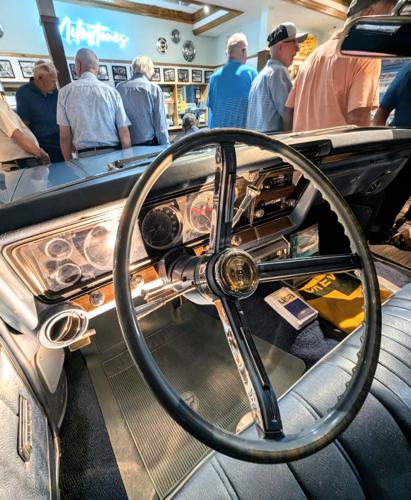
They would have watched it roll past, its hood closed over an eight-cylinder, 275-horsepower Turbo-Fire engine built to propel a car with double-headlights and a long, low-finned body accented with yards of gleaming silver chrome, a black soft-top roof, and a cavernous trunk almost big enough to fit a twin mattress inside.
Tangible history, a car door emblazoned with GM鈥檚 prideful seal testifying that 100 million cars had come before it. Such sights served as a catalyst for the old auto plant workers, bringing back into focus how their lives felt 59 years ago.
Jeffery, Frey and Bob Rossiter marveled at how handsome the blue Caprice鈥檚 paint color has remained. And for the life of them, they can鈥檛 fathom why it turned out so well.
Cars at that time were built on the line with major body components that were painted in two separate paint shops. The shops used paint colors formulated by two different paint manufacturers.
When the colors didn鈥檛 quite match, the two paint shops would trade paint, mixing them together to even out the hue.
So how was GM鈥檚 original Nantucket blue actually supposed to look? Who knows.
Jeffery shook his head in disbelief at the men鈥檚 uncanny, collective recall of a single, small nuance tied to just one car, just one paint color, one memory in 100 million cars.
Looking around the room at men who are now old, yet somehow the same, inside a museum full of things that once lived on a factory floor so huge people traversed it on three-wheel bikes as cars rushed off the line every 45 seconds, Jeffery officially settled the score on what he believes constitutes total automotive perfection.
Jeffery鈥檚 favorite body color on a 鈥�67 Chevy Caprice?
鈥淚 guess it鈥檇 be white,鈥� he said. 鈥淪afe white.鈥�
A side view of the 100-millionth vehicle General Motors produced on April 21, 1967 at the former 糖心Vlog传媒 General Motors Assembly plant.聽