
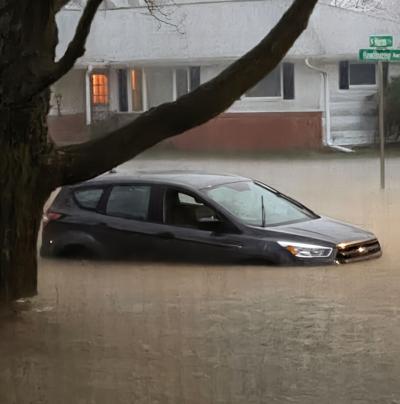
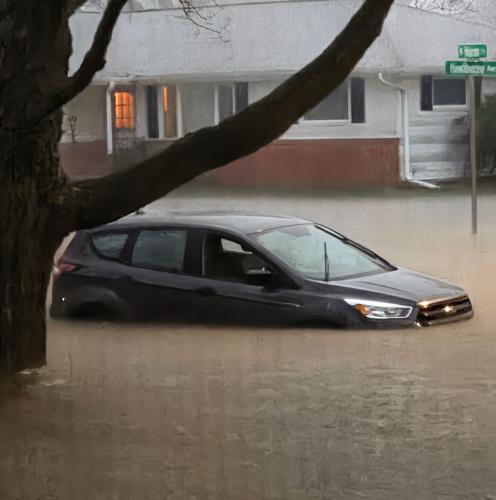
When a spring storm swept across Rock County earlier this month, it brought tornadoes, lightning and widespread flooding — and triggered a different kind of deluge: calls for water remediation and mold-prevention services.
Area water and flood remediation companies report a surge in calls over the last two weeks as residents attempt to rescue their homes and businesses from the vagaries of weather-related water damage.
The flooding followed powerful storms that came through southern Wisconsin the evening of April 17. The storms brought torrential rain, lightning and tornado touchdowns. While official precipitation totals aren’t available for all of Rock County, estimates included that as much as 3 to 5 inches of rain fell in parts of the county in just a few hours, leading to extensive flooding in parts of ÌÇÐÄVlog´«Ã½, Beloit and other areas.
That flooding led some residents to ask professionals for help. Officials with two Wisconsin companies said that while they would normally handle 20 or so calls per week to fix or prevent water damage, some said they received hundreds if not 1,000, calls, since the April 17 storm.
Caleb Bennett, manager of Flood Pros Water Damage Restoration, said his company’s phones have not stopped ringing.
“We’re getting literally call after call, sometimes having two, three people on hold. I couldn’t give you a number,� Bennett said.
Adam Krecak, co-owner of Flood Guys Restoration, said the volume of work has been intense, but they’re keeping up. Krecak didn’t have exact numbers for calls but said his team of 10 employees have been working constantly since the storms. In some cases, work shifts stretch to 12 hours or longer if needed.
“It’s been very, very busy,� he said. “Lots of calls. Nonstop.�
Bennett’s Flood Pros Water Damage Restoration is based in ÌÇÐÄVlog´«Ã½ and Machesney Park, Ill., and shares about 25 employees between the two locations, which serve Rock County and northern Illinois.
Krecak’s company is based in Greendale and serves southeastern, northeastern and south-central parts of the state, including Milwaukee, Madison, Sheboygan, Fond du Lac, Kenosha and ÌÇÐÄVlog´«Ã½.
Both said most of their business has been focused on residential properties and they normally provide both water mitigation and cleanup services. In the recent they said that there was a common thread: Residents found their sump pumps could not keep up with groundwater saturation around their homes.
Krecak said much of the work is repairing or replacing sump pumps with motors or mechanicals that burned out during the deluge April 17. Then there’s the remaining standing water in basements. The focus of their work is to remove standing water — and then to sanitize, clean and dry the property.
“You demo the affected building materials, such as carpeting, padding, some drywall has to come out, some wet insulation has to come out, trim, door frames,� he said. “Sometimes, you know, contents that got wet. And then you can disinfect and clean the area, and then set up commercial drying equipment, like fans and dehumidifiers, air purification systems.�
Bennett described a similar approach, plus structural repairs when needed.
“We offer waterproofing solutions to prevent this type of issue. So, we can do like crack repairs and sealing people’s windows off and preventative services to prevent these events from happening again,� he said.
Krecak said that despite the heavy call volume, they’ve still been able to complete work usually within 24 hours of the call. He added that they’ve been able to respond withing an hour of the call.
These teams have seen this kind of flooding and workload in the past, Bennett said.
“I think a couple years ago in July, we had a similar rain event to this, and the exact same thing happened where people’s basements were leaking water, sump pumps were failing and drains were backing up because of the water pressure in the city sewer lines,� he said.
Despite the regularity of these kinds of storms, the problems associated with flooding and water damage can be traumatic for homeowners, Krecak said.
“It’s familiar to us, but a lot of people, it’s shocking. It’s their first time going through something like this,� he said.
Krecak said the best prevention for homeowners is to make sure they have the right insurance coverage. He said many people with insurance for water losses don’t have riders that provide enough of a payout for the actual damage that a swamped basement can cause.
It can total $5,000 at minimum.
Then there’s potential health risks from mold, which can develop just a few days after flooding. The source of the water is what determines the risk, he added.
“Flood waters are essentially ground waters. So, whatever is in the ground, chemicals, pesticides, anything, that water is now entering into your home,� Krecac said. “That’s not clean water, and especially if it’s sewage water. Then that’s a biohazard risk.
He said contaminants from floodwater or flood water residue can go airborne.
“You’re breathing the air. It’s in a contained space, high humidity, there’s a lot of moisture in the air. Not only is it a mold risk, but just a health hazard risk,� he said.
Krecak thinks a glut of flood cleanup will increase his crews’ workload for about another week.
“By then, I think it’ll have really started to slow down, and you might have a couple people who were on vacation or who just didn’t take action right away. There are those kind of people who think they can handle it themselves and then realize that they can’t. Those will always filter in, but I think the majority of people who are trying to take action are going to be serviced within by the next week,� he said.


