
Some of the country鈥檚 largest liberal foundations are quietly working to raise at least $250 million to help civil groups push back against President Donald Trump and what they see as his steady drift toward authoritarianism, according to people briefed on the matter.

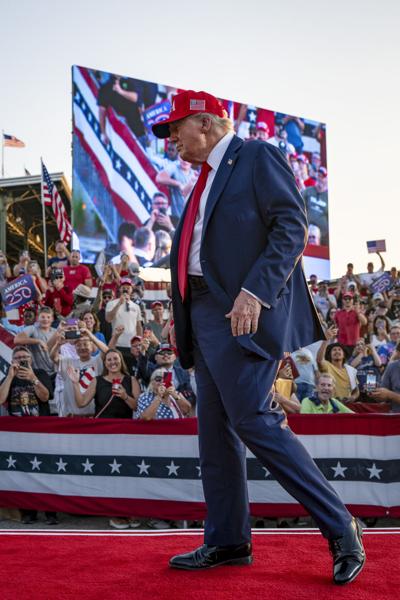
President Donald Trump takes the stage to speak at the Iowa State Fairgrounds in Des Moines, July 3, 2025, to kickoff of America250, a yearlong series of events to celebrate the 250th anniversary of the country鈥檚 founding. Some of the country鈥檚 largest liberal foundations are quietly working to raise at least $250 million to help civil groups push back against President Trump and what they see as his steady drift toward authoritarianism, according to people briefed on the matter. (Haiyun Jiang/The New York Times)
The effort is in its early days, working to secure initial commitments. But the scale of the collaborative undertaking has turned heads in the tightly networked world of philanthropy. It comes as donors are licking their wounds and many efforts to raise capital for liberal work are struggling.
If successful, it would be among the most financially ambitious initiatives to oppose Trump鈥檚 attacks on institutions. Some see it as a glimmer of hope in a community of progressive donors who have despaired over the new administration鈥檚 actions.
Recipients of the money raised would be nonpartisan nonprofits, not Democratic candidates or committees. The ultimate beneficiaries could include groups or individuals that file lawsuits against the government, provide security and safety for activists, or underwrite news media organizations or nonprofits seen as essential to the functions of democracy, the people said.
The effort, described by eight people briefed on it, is shrouded in secrecy. The philanthropic executives and donors involved are keeping a close grip on the details of their plans and the identities of the participants, out of fear that leaks could imperil their work and encourage retribution by Trump.
That gets at a bigger contradiction of political philanthropy in the Trump era: Benefactors want to organize themselves and spread the word about their intentions adequately to raise huge sums of money, but not to the point that their efforts receive unwanted attention from Trump.
At the center of the $250 million initiative as it has taken shape in recent months is Deepak Bhargava, the president of a foundation that in December was renamed Freedom Together. Bhargava has kept a busy schedule of conferences and private meetings, working to line up other donors and to band together as many as a dozen other foundations, according to the people briefed on the matter.
Bhargava is working closely with John Palfrey, president of the John D. and Catherine T. MacArthur Foundation, one of the nation鈥檚 largest philanthropies, to raise money, according to the people briefed on the efforts. Palfrey has emerged as an outspoken leader of the philanthropic sector in the second Trump term, warning against intimidation and defending the sector鈥檚 freedom to give without fear of retaliation.
In May, Freedom Together hired a philanthropy executive, Rodney McKenzie, to help coordinate the budding collaborative. Another person involved is Bill Dempsey, a philanthropic consultant who has worked in fundraising at the Service Employees International Union.
In an interview, Bhargava declined to discuss the fundraising drive but did speak generally about his fears for the country and its political system.
鈥淚t鈥檚 not unusual that we and other foundations that are concerned about protecting democracy and the rule of law meet a lot, especially now,鈥� he said, saying they 鈥渟hare notes, compare what鈥檚 going on, give each other recommendations about what to fund.鈥�
Asked about the $250 million goal, he would say only that 鈥渢here are a lot of groups in the field that are working on democracy issues that have identified major gaps that they鈥檝e made us and other funders aware of.鈥�
The money raised would be awarded by 501漏(3) tax-exempt institutions, which are prohibited from participating in political campaigns.
Some Democrats aware of the effort have privately criticized the idea of so much money flowing into Bhargava鈥檚 effort for precisely that reason, arguing that liberal donors would be wiser to channel even their tax-exempt giving into work that could at least indirectly aid progressive organizing and elections, like voter registration in battleground states.
It is unclear how much Bhargava has secured in commitments. In private conversations dating to the fall, his aides have said the goal is to form a 鈥渕ega-collaborative鈥� institution, because Freedom Together鈥檚 assets by themselves are not big enough to achieve the sweep of what they want to accomplish, according to a participant in those talks.
Bhargava, 56, was born in Bangalore, India, grew up in the New York City borough of the Bronx, and graduated from Harvard University. He began his career at community-organizing firm Acorn as a spokesperson and lobbyist, publicizing Acorn鈥檚 research to journalists and elected officials. Before coming to his current employer, he spent 16 years running the Center for Community Change, largely pushing for immigration reform, and became extremely well known in the world of progressive giving.
He has also been a past adviser to the Open Society Foundations, the philanthropy of Democratic billionaire George Soros. It is unclear whether Soros鈥� foundation is participating in the current effort.
The Freedom Together foundation, which has about $3 billion in assets, according to its latest tax filing, was known until last year as the JPB Foundation. It was funded by the estate of Jeffry Picower, who was a business associate of disgraced investor Bernie Madoff.
Many charitable foundations give away just 5% of their assets a year, the legal minimum to maintain tax-exempt status. Since Trump鈥檚 election last year, Bhargava has been encouraging other foundations to increase their so-called payout rate. He has said that Freedom Together will give at almost twice that rate this year.
One indication of the sort of activities the new collaborative could choose to support may have come in May, when Freedom Together announced a $5 million fund called the Courage Project, which will make cash awards to activists displaying 鈥渃ivic bravery,鈥� such as by assisting people who have been detained by immigration authorities.
Another indication may come from a separate, also secretive effort called Beacon, which is being funded by Freedom Together and other aligned donors, according to three people familiar with the arrangement. Beacon coordinates response teams for people engaged in the fight against Trump鈥檚 policies and others who find themselves facing legal, online or even physical attacks and need help with security, lawyers or other forms of assistance.