
The Trump administration is eyeing a $200 billion supplemental spending package for the U.S. and Israel war against Iran.
A coalition of agriculture groups have written President Donald Trump and congressional leaders asking for “market relief� for farmers hit by the impacts of the war, which have included significantly higher fuel and fertilizer costs.
They are also advocating for year-around sales of ethanol, which is restricted during the summer months due to environmental regulations, according to their March 19 letter to Trump.
The Missouri-based Renewable Fuels Association (RFA) also is petitioning Trump for “broader use of lower-cost� ethanol “to help blunt the impacts of higher crude oil and gasoline prices.�
“Adding larger volumes of low-cost ethanol to gasoline is a proven solution for reducing fuel prices and helping to insulate the U.S. market from global supply shocks,� RFA President and CEO Geoff Cooper said in a letter earlier this month to Interior Secretary Doug Burgum.
The ethanol industry group also wants the U.S. administration to lift seasonal restrictions on the ethanol sales. Cooper said U.S.-produced ethanol was selling at 31% less at the wholesale level than gasoline earlier this month.
STRAIT FLUSH
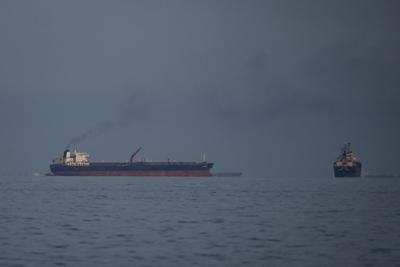
The war has resulted in blocked oil tanker and cargo traffic through the Strait of Hormuz in the Persian Gulf. Approximately 20 million barrels of oil usually flow through the strait, according to the U.S. Energy Information Administration. That accounts for 20% of global oil supplies.
Oil prices have increased since the start of the war on the last day of February.
International crude oil prices (Brent) have been trading at approximately $110 per barrel on Friday — up 52% since the war’s first salvos.
U.S. crude oil (West Texas Intermediate) was trading at close to $99 per barrel Friday — 47% higher than before the U.S. and Israel’s war with Iran.
Gasoline prices are approaching $4 per gallon nationally.
According to AAA’s Fuel Gauge Report, the national average for gasoline stood at $3.91 per gallon Friday. That’s up 31% since the start of the war Feb. 28, when the U.S and Israel first struck Iran, killing Supreme Leader Ayatollah Ali Khamenei. Israel has also killed Iran’s security and intelligence chiefs.
Diesel prices averaged $5.16 per gallon as of Friday, according to AAA. A month ago, diesel prices averaged $3.69 per gallon.
That translates into a 40% jump in diesel costs hitting scores of industries (including farmers and truckers) as well as already financially strained and inflation-weary consumers.
FERTILIZER FRENZY
Restricted cargo flows through the Strait of Hormuz are also impacting and raising prices for fertilizer and its components.
Fertilizer prices are up between 25% and 50% since the start of the war, according to research groups.
“The Middle East is home to leading exporters of both liquified natural gas (LNG), a major feedstock for synthetic nitrogenous fertilizers, and fertilizers themselves, including urea and ammonia, the most common forms of nitrogenous fertilizers,� according to an analysis by the Center for Strategic and International Studies (CSIS). “A vast majority of these exports pass through the Strait of Hormuz. All told, the strait supports 20% of global LNG exports and 20–30% of global fertilizer exports, including 35% of global urea exports.�
CSIS analysts said phosphate fertilizer is also impacted by the Iran war.
“Approximately 20% of global phosphate fertilizer trade originates from countries affected by the strait’s disruptions or the regional conflict more broadly, with Saudi Arabia and Israel together accounting for 17% of global phosphate fertilizer exports. Furthermore, sulfur, a byproduct of oil and gas processing, is also critical for phosphate fertilizer production. Approximately 45% of global sulfur trade is affected by the conflict’s disruptions,� CSIS analysts said in their March 12 report.
“If energy shipments through the strait remain curtailed, and sulfur output falls alongside fuel exports, then the ability of many countries to produce phosphate fertilizers will be diminished,� the report warns
That is creating concerns about higher production costs and prices, as well as global food supply chains.
“Maritime freight disruptions from the ongoing conflict in Iran pose significant consequences to food security here at home and around the world,� the ag groups said in their March 19 letter.
The agricultural advocacy groups also said farmers and growers have been hurt by winter storms in some parts of the U.S and drought conditions in other regions.
Organizations signing the letter included the American Farm Bureau Federation, Washington Winegrowers Association, U.S. Apple Association. National Cotton Council, Western Growers Association and National Christmas Tree Association.
Groups representing florists, farmers harvesting blueberries, sugar beets and onions, as well as and watermelon, citrus, cranberries and sugar cane growers also signed onto the letter seeking federal assistance.
In addition to the ethanol push, they want one-time financial help and tax incentives to be included in Trump’s expected war spending package.
The Farm Bureau has welcomed Trump’s move to temporarily lift the Jones Act, which requires cargo between U.S. ports to be transported by American-flagged ships.
“The agriculture/food production industry is highly exposed given the diesel-powered heavy machinery used in production, the distribution costs required for products to reach consumers, and the fertilizer required to maintain crop yields,� said Ben Johnston, COO of Kapitus, a small business investments and lending firm.
“Rising oil prices are yet another shock to operating margins that farmers and other agriculture/food production businesses need to contend with,� Johnston said, referring to Trump’s “Liberation Day� and other tariffs.
Last month, the U.S. Supreme Court struck down some of the tariffs Trump invoked via an emergency powers law. Still, other tariffs persist and Trump has promised to use other mechanisms to impose import taxes.
In response to those tariffs and fatigue over post-pandemic inflation, Johnston said businesses, across multiple industries, “were pulling every lever they think of how not to raise prices and they waited as long they could to do so.�
He said that will not be as easy if there is a prolonged run-up in fuel and other prices due to the war.
“It’s going to happen much, much faster as related to oil and gas,� Johnston said.
The inflationary impacts will be felt by consumers as well as truckers, construction contractors, supply chains and manufacturers.
Johnston said businesses will react if their bottom lines are hit by the war impacts and could delay capital spending, mergers and acquisitions and other expenditures. He said businesses should make sure they have working capital and reserves to withstand tighter margins and macroeconomic turbulence.
It also comes after February figures showed the U.S. economy lost 92,000 jobs, according to the U.S. Bureau of Labor Statistics.
WAR FOOTING
Trump and Israeli Prime Minister Benjamin Netanyahu have struck at Iran, aiming to decapitate the Islamist regime’s leadership, military arsenal and nuclear aspirations. Israel has also hit some of Iran’s energy infrastructure.
Iran has targeted Israeli cities, American military bases and embassies in the region and oil-rich Persian Gulf states aligned with Trump and the U.S.
Oil tankers and cargo ships have also been hit by Iranian drones and other weapons, stalling maritime shipping in the strait.
Shipping firms would like U.S. Navy and other military escorts through the strait. But the Pentagon has said it is not yet ready for that.
The U.S. has attacked Iranian military installations on Kharg Island and Trump could dispatch Marines and other troops to take over its oil facilities.
On Friday, Trump slammed NATO countries for not helping secure oil flows, saying the strait is “the single reason for the high oil prices.� Trump called NATO a “paper tiger� without the U.S., calling European and other allies in the transatlantic alliance “cowards.�
Trump said later Friday that the U.S. was “getting very close to meeting our objectives� and “winding down� its part in the war, citing destruction of Iran’s military capabilities and nuclear aspirations, as well as protecting allies such as Israel, Saudi Arabia and Persian Gulf states.
Trump said in a social media post that countries and regions that rely more on oil from the Persian Gulf should “police� the strait going forward.
Only about 2% of the petroleum consumed in the U.S. comes from the Gulf, according to the Institute for Energy Research (IFER). Conversely, 80% of oil transported through the strait ends up in China, Japan, South Korean and other Asian markets, according IFER.
“The Hormuz Strait will have to be guarded and policed, as necessary, by other nations who use it — The United States does not,� Trump said. “If asked, we will help these countries in their Hormuz efforts, but it shouldn’t be necessary once Iran’s threat is eradicated. Importantly, it will be an easy military operation for them.�
Johnston said higher oil and gas prices in Asia can impact the prices of U.S. consumer goods as well as supply chains utilized by American companies.
On Saturday,Trump issued an ultimatum threatening Iran’s power grid if the Strait of Hormuz is not opened in 48 hours.
“If Iran doesn’t FULLY OPEN, WITHOUT THREAT, the Strait of Hormuz, within 48 HOURS from this exact point in time, the United States of America will hit and obliterate their various POWER PLANTS, STARTING WITH THE BIGGEST ONE FIRST!,� Trump said in a Truth Social post.
The International Energy Agency (IEA) — comprised of 32 countries (including the U.S.) — is releasing a record 400 million barrels of oil in response to the war. That includes 172 million barrels released by Trump from the U.S. Strategic Petroleum Reserve.
On Friday, the IEA, which also includes European countries, Japan, Canada, Mexico, Australia and South Korea, issued a warning as some energy analysts worry about even higher oil and gas prices.
“The war in the Middle East is creating a major energy crisis, including the largest supply disruption in the history of the global oil market. In the absence of a swift resolution, the impacts on energy markets and economies are set to become more and more severe,� said IEA Executive Director Fatih Birol.


