

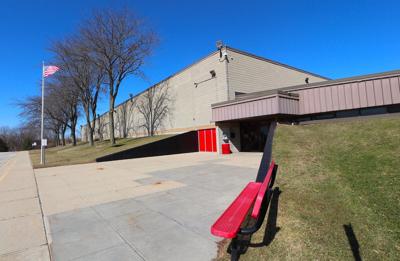

K-12 public schools are seeing declining student enrollments across the country.
Fewer students are enrolling in and attending classes in higher-growth states, such as Florida and North Carolina, as well as districts serving smaller towns in Minnesota, Wisconsin and Montana, and big city districts like Los Angeles, New York City, Chicago and Seattle.
Approximately 49.27 million students are enrolled in public K-12 schools nationally, according to the latest U.S. Department of Education (DOE) data. That is a decrease of 1.44 million students since 2019.
Enrollments are projected to decline further, with 46.9 million students expected in K-12 public schools by 2031, according to the National Center for Education Statistics.
Declining and flat student counts are putting financial pressure on districts whose state funding is tied to student headcounts.
Some districts are cutting staff and teaching positions. Others are combining or closing schools.
CAUSE AND EFFECTSo, what鈥檚 causing the sea change in American public education?
Lower U.S. birth rates are the main long-term driver of sliding enrollment counts, according to Zahava Stadler, project director of the Education Funding Equity Initiative at New America (a liberal think tank).
The U.S. fertility rate has been falling and hit a new record low in 2025, with 53.1 births per 1,000 for women ages 15 to 44, according to the U.S. Centers for Disease Control.
Births totaled 3.6 million babies in 2025 鈥� down 23% since 2007. There were nearly 4 million babies born in the U.S. in 2014 and more than 4.1 million born in 2009, according to CDC data.
Stadler said those numbers are part of long-term trends, lower birth rates and smaller family formations.
鈥淭his is a train we鈥檝e seen coming down the track for a long time,鈥� she said.
Anindya Kundu, a sociologist and education policy professor at Florida International University, said longer-term demographic and societal trends, and higher costs of living since the pandemic, are all leading to smaller and delayed family formations.
CDC data shows more babies are now being born to women over the age of 40 than those born to teenagers.
MONEY CRUNCHSchool districts will receive less state funding with lower enrollment counts and will have to right-size physical footprints.
鈥淪chool buildings are built for larger enrollments than they are now serving,鈥� Stadler said.
鈥淭here鈥檚 a lot of what you might call shrinkage pains across the country,鈥� she said, referring to districts closing and consolidating schools.
There are also some districts eyeing mergers with other districts.
Falling enrollments and reductions in state per-pupil funding are resulting in budget deficits for school districts, prompting cuts to staffing and programs as well as curriculum changes at some schools.
There are instances of this across the country, including the shuttering of the Hustisford School District right here in Wisconsin. With enrollment numbers dropping and multiple operational referendums failing in recent year, the district has initiated the process of dissolving at the end of the 2026-27 academic year.
In North Carolina, Pitt County Schools (near Greenville) are looking at cutting 67 teaching positions due to a drop in enrollment and an expected $5.8 million loss in state funding.
The Cedar Rapids Community School District in Iowa is closing six schools to save more than $5 million after imposing previous cuts in the face of declining enrollments and budget shortfalls.
In Minnesota, the Le Sueur-Henderson School District (southwest of Minneapolis) is decreasing its required high school social studies credits as it trims staffing.
Sarah Davidon, a professor senior policy adviser at Georgetown University School of Medicine, worries enrollment-based funding declines will result in cuts to counseling and behavioral health positions that help address bullying and bolster suicide prevention and potentially mitigate school violence.
鈥淭hey are so impactful,鈥� she said of those efforts, which frequently face the chopping block before classroom teaching positions.
Voters across the country have also shown skepticism toward bonds and levies for school districts that raise property taxes in light of rising costs since the pandemic.
TRUST ISSUESMark Friend, company director at Classroom365 Limited, an education technology firm, said his firm noticed the post-pandemic enrollment drops 12 to 18 months before they were officially reported based on computer and technology orders.
He notes significant changes in parents鈥� overall trust relating to sending their kids to school, in particular since the shutdowns of the COVID-19 pandemic.
鈥淧arent dissatisfaction with their local education system, which was previously at zero complaints, is now turning toward a search for other options for their children,鈥� Friend said. 鈥淭his is not a mere blip but a significant shift in a family鈥檚 view of the education system and a permanent change in the way families view their children鈥檚 education.鈥�
That shift is manifesting for various reasons, in various ways.
Friend said there has been a significant increase in homeschooling and privately run microschools offering smaller class sizes with less institutional and bureaucratic cultures.
鈥淎dditionally, there continues to be an increase in the number of families trying to stay out of the reach of immigration enforcement by choosing not to register their children for public schooling in urban areas,鈥� Friend said, referring to fears about the Trump administration鈥檚 immigration crackdowns.
Stadler said education statistics show homeschooling and nontraditional settings, such as microschools, while growing, still make up smaller percentages of the American landscape.
She also sees the trend with families worried about immigration enforcement.
鈥淭here are a lot of kids who have left public schools and we don鈥檛 know where they end up,鈥� Stadler said.
Kundu, who also sees immigration enforcement impacts on school enrollment and attendance in Florida, said there have been conservative pushes against public education via criticism of teachers鈥� unions and curriculum.
鈥淭his has been going on for quite a long time,鈥� Kundu said, pointing to fights over critical race theory and controversial books.
Teachers鈥� unions have also taken liberal positions and often back Democratic and progressive candidates and causes.
All that has led some conservative parents to look at alternatives and spur conservative policy pushes for charter schools and private school vouchers.
Charter schools reported close to 15% enrollment growth between 2019 and 2025 compared to 4% declines for public schools, according to the National Alliance of Public Charter Schools.
Charter school enrollments stand at more than 3.9 million students, according to DOE.
Erin Beers, a 7th-grade teacher in Cincinnati who offers classroom resources online to other educators, contends that school voucher programs drive some of the strains on public schools.
鈥淚f a student decides to enroll at a private school (in Ohio), this program basically transfers their local tax dollars to the private school of their choice. This amounts to $6,165 (K-8) or $8,407 (high school) in tax dollars being transferred away from the student鈥檚 local school district to the private school,鈥� she said.
Beers said that can hit smaller districts in particular.
鈥淭o be fair, it is supposed to create competition that, in theory, should lead to better educational opportunities for everyone,鈥� she said. 鈥淭he downside, though, for public school districts, is budget planning. The smaller the school district, the tighter the budget. Even a 5-10% shift in tax dollars can lead to difficult decisions about which services can be offered to enrolled students.鈥�
鈥楽AFER, SMALLER, MORE RESPONSIVE鈥�Manuel Ferrer, a former teacher and Florida-based education consultant, said more alternative educational options have emerged for parents who have seen some of the challenges and deficiencies of public schools during the virtual learning of the pandemic.
鈥淥nce they find an option that feels safer, smaller, or more responsive, many don鈥檛 return,鈥� he said, pointing to parents turning to microschools and other alternatives.
Davidon and Ferrar also said there are concerns about security with the high-profile focus on school shootings and security measures taken at K-12 campuses.
鈥淔amilies talk about academics, but safety, order, and culture often drive the final decision,鈥� Ferrar said. 鈥淭his is not a temporary dip. The learning environment has new DNA after the pandemic. Families want more responsiveness, more transparency, and a clearer sense of outcomes.鈥�